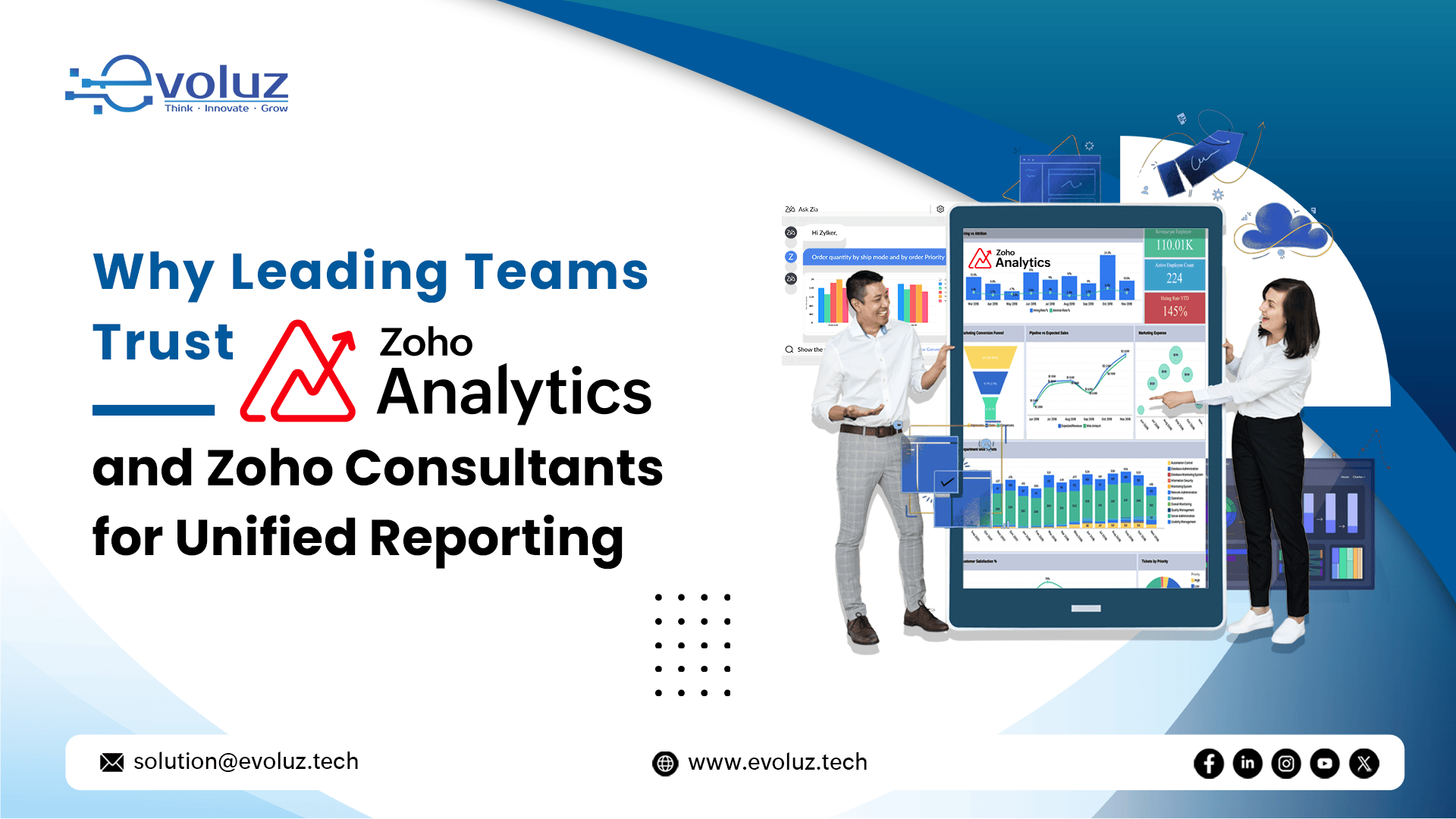
- →Zoho Analytics consolidates data from CRM, Books, Desk, Projects, and marketing platforms into a single reporting environment, giving all departments a consistent view of the same data.
- →Sales, marketing, finance, and operations teams each get dashboards tailored to their specific KPIs rather than sharing a generic report.
- →Built-in AI features identify anomalies, predict future trends from historical data, and allow users to ask business questions in plain language.
- →The platform supports role-based access controls, data encryption in transit and at rest, and region-specific hosting for regulated markets in the UK, EU, and Middle East.
- →Zoho Consultants design scalable data models and define KPI logic before configuration begins, which reduces rework and improves reporting accuracy over time.
In 2026, most businesses are no longer struggling to collect data—they are struggling to make sense of it. Sales, marketing, finance, operations, and customer support all generate large volumes of information across multiple platforms and regions, often in parallel and without alignment. The real challenge is consolidating that data into a single, reliable view and using it to make timely, confident decisions.
This is where Zoho Analytics plays a critical role. As a unified business intelligence platform, Zoho Analytics enables organizations to centralize data, standardize reporting and generate actionable insights that support both strategic planning and day-to-day operations. To fully realize these benefits, many organizations work with experienced Zoho Consultants who design analytics frameworks aligned with business objectives, regional compliance requirements, and long-term scalability.
What Is Zoho Analytics?
Zoho Analytics is a cloud-based business intelligence and analytics platform designed to collect data from multiple sources, process it into structured formats, and present it through interactive dashboards and reports.
It allows organizations to analyze operational, financial, marketing, and customer data within a single environment.
Core Capabilities of Zoho Analytics
- Custom dashboards and visual reports
- AI-powered insights and predictive analytics
- Secure data sharing with role-based access
- Support for regional data hosting and compliance
By 2026, Zoho Analytics has evolved into a decision-support system rather than a static reporting tool.


How Zoho Analytics Works
Zoho Analytics functions by connecting data sources, modeling relationships between datasets and transforming raw information into usable insights.
Data Integration and Connectivity
Zoho Analytics supports integration with:
- Zoho CRM
- Zoho Books
- Zoho Desk
- Zoho Projects
- Marketing and advertising platforms
- Databases, spreadsheets, and cloud storage systems
Data is automatically refreshed based on configured schedules, reducing manual effort and reporting delays.
Data Processing and Modeling
Once data is imported:
- Tables are structured and linked
- Metrics and KPIs are standardized
- Calculated fields are applied where required
This modeling layer ensures consistency across reports and dashboards.
Visualization and Reporting
Users can create:
- Charts, pivot tables, and summary views
- Role-specific dashboards for different teams
- Scheduled and on-demand reports
Dashboards are accessible across devices, supporting distributed and remote teams.
What Zoho Analytics Is Used For
Zoho Analytics is used across departments to support both strategic and operational decision-making.
Sales Performance and Pipeline Analysis
Sales teams use Zoho Analytics to:
- Monitor pipeline health and deal progression
- Analyze conversion rates and sales velocity
- Forecast revenue by region, product, or team

Marketing Campaign and ROI Tracking
Marketing teams rely on Zoho Analytics to:
- Measure campaign effectiveness
- Track cost per lead and cost per acquisition
- Connect marketing spend to revenue outcomes
Financial Reporting and Forecasting
Finance teams use Zoho Analytics for:
- Revenue and expense analysis
- Cash flow visibility
- Budget vs. actual comparisons
Operations and Service Insights
Operations and support teams analyze:
- Resource utilization
- Project performance
- Customer service trends and resolution times

How Businesses Use Zoho Analytics Effectively
Successful implementations focus on clarity, consistency, and adoption.
Defining Business-Critical KPIs
Effective analytics starts with KPIs that reflect business objectives, such as:
- Revenue growth and profitability
- Customer acquisition and retention
- Operational efficiency
Avoiding excessive or redundant metrics improves usability and trust.
For teams that need a reporting framework designed before dashboards are built, our zoho frd trd documentation service defines KPIs, data sources, and reporting logic as a written specification before any configuration begins.
Creating Stakeholder-Specific Dashboards
Different teams require different views:
- Leadership dashboards focus on trends and outcomes
- Managers track performance and targets
- Operational teams monitor daily activities
Leveraging AI and Advanced Analytics
Zoho Analytics includes AI-driven features that help:
- Identify anomalies and performance changes
- Predict future trends using historical data
- Answer business questions using natural language
These features reduce analysis time and improve responsiveness.
Security, Compliance, and Regional Readiness
In 2026, data governance is a core requirement for analytics platforms. Zoho Analytics supports:
- Role-based access controls
- Data encryption in transit and at rest
- Region-specific data hosting options
- Compliance with data protection regulations
This makes it suitable for organizations operating in the UK, EU, Middle East, and other regulated regions.


Why Zoho Consultants Matter for Zoho Analytics Implementation
While Zoho Analytics is designed for usability, implementation quality determines long-term success. Zoho Consultants help organizations:
- Design scalable data models
- Define meaningful KPIs and reporting structures
- Configure integrations correctly
- Align analytics with regional and compliance needs
- Improve user adoption across teams
Their involvement reduces rework, improves accuracy, and accelerates return on investment.
Zoho Analytics for Unified Reporting Across Teams
Unified reporting ensures all departments work with consistent data and definitions. With Zoho Analytics:
- Teams access a single source of truth
- Reporting discrepancies are reduced
- Decision-making becomes faster and data-driven
This alignment improves collaboration and accountability across the organization.

Conclusion
Zoho Analytics has become a trusted analytics platform for organizations seeking unified reporting, real-time insights, and scalable business intelligence in 2026.
By combining robust analytics capabilities with expert guidance from Zoho Consultants, businesses can transform data into reliable insights that support growth, efficiency, and informed decision-making.
If your organization is aiming to build a reliable, scalable analytics framework with Zoho Analytics, working with the right Zoho Consultants makes a measurable difference. Evoluz Global Solutions helps businesses design and implement unified reporting that aligns data, dashboards, and KPIs with real business objectives—across sales, marketing, finance, and operations.
Whether you are implementing Zoho Analytics for the first time or optimizing an existing setup, Evoluz ensures your analytics environment delivers consistent insights, supports regional compliance needs, and drives informed decision-making. Connect with Evoluz to turn your business data into clarity, confidence, and sustainable growth.
Unified Reporting Only Works When the Data Architecture Behind It Is Clean.
Explore Zoho Analytics Consulting